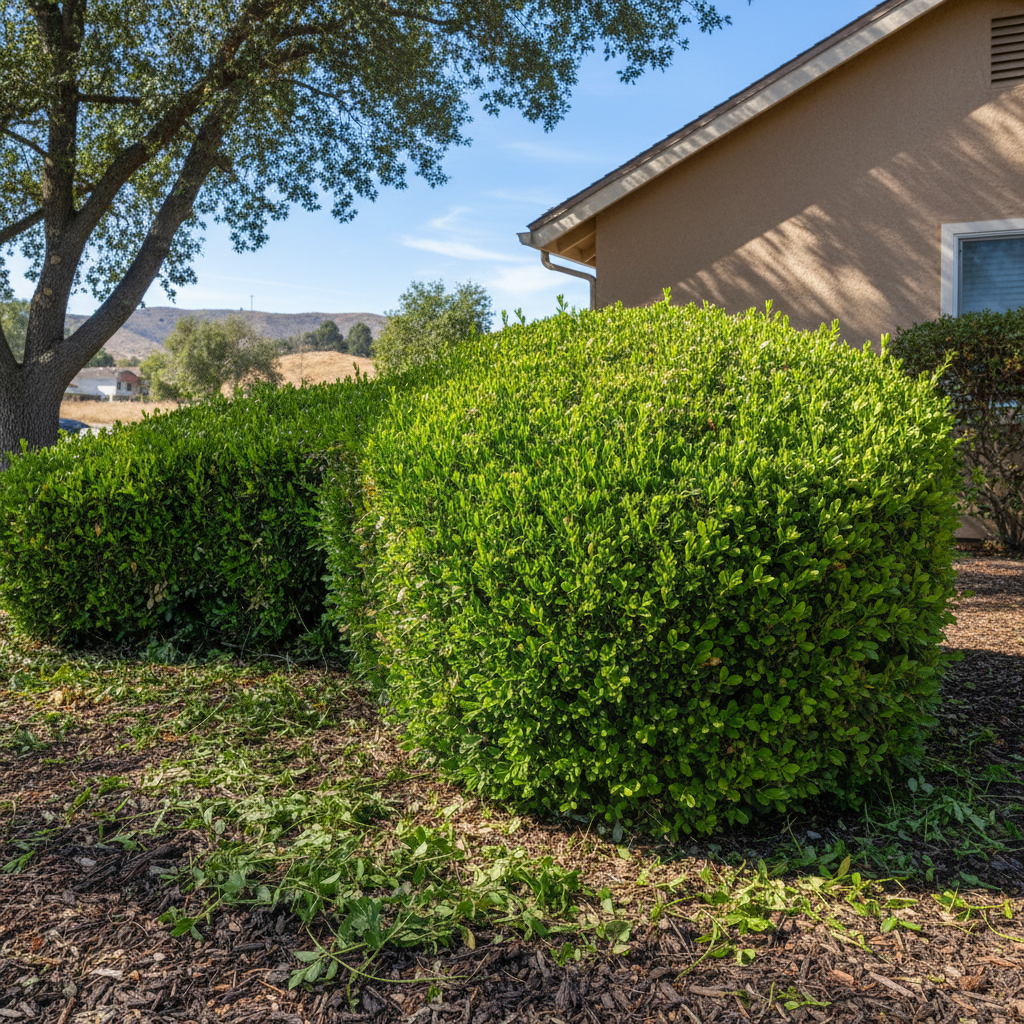
You've got shrubs, you've got bushes, and you've probably got questions about how to keep 'em looking good without killing 'em. I hear a lot of the same stuff from homeowners around National City, especially when it comes to trimming. So, I figured I'd lay out some honest answers to the most common questions I get. No fluff, just what you need to know.
When's the best time to trim my shrubs and bushes?
This is probably the number one question, and it's a good one because timing is everything. For most deciduous shrubs – those that lose their leaves in winter, like roses, hydrangeas, or crape myrtles – the best time to do your main, heavier pruning is in late winter or early spring, before new growth really kicks in. The plant is dormant, so it's less stressed, and you can see its structure better without all the leaves. Plus, you're not cutting off new flower buds for spring bloomers.
For evergreen shrubs – the ones that keep their leaves year-round, think boxwoods, junipers, or oleanders – you generally want to trim them after their main growth spurt, usually in late spring or early summer. You can do lighter touch-ups throughout the year to maintain shape, but avoid heavy pruning too close to winter. New growth stimulated by late-season trimming might not harden off before a cold snap, and that can damage the plant. Here in National City, we don't get super harsh winters, but a cold snap can still do a number on tender new growth.
What's the difference between 'pruning' and 'trimming'? Do I need both?
Yeah, people use these terms interchangeably a lot, but there's a distinction in the trade. 'Pruning' is more about the health and structure of the plant. You're removing dead, diseased, or damaged branches, improving air circulation, or shaping the plant for its long-term health and vigor. It's often more selective, cutting back to a specific bud or branch junction. Think of it like surgery for your plant.
'Trimming,' on the other hand, is usually about aesthetics and maintenance. It's what you do to keep a hedge neat, to control size, or to get a specific shape. You're often cutting off the ends of branches to encourage denser growth or to maintain a uniform appearance. So, while all trimming is a form of pruning, not all pruning is just trimming for shape. You definitely need both if you want healthy, good-looking shrubs.
Can I just use hedge shears for everything?
You can, but it's not always the best idea. For formal hedges where you want a very straight, uniform look, hedge shears (manual or powered) are perfect. They're designed for shearing off a lot of small growth quickly. But for individual shrubs, especially those with larger branches or a more natural growth habit, you're better off with bypass pruners, loppers, and maybe even a small hand saw.
Hedge shears tend to just cut the outer layer of foliage, which can lead to a dense outer shell and bare interior, especially over time. This is called 'shearing' and it's fine for some plants, but for others, it can reduce flowering or fruit production and make them more susceptible to disease because of poor air circulation inside. For a healthier plant, make selective cuts deeper into the shrub with bypass pruners to remove whole branches or thin out crowded areas. It’ll make a big difference in the long run.
My shrubs are overgrown. Can I cut them way back?
This is called 'rejuvenation pruning' or 'renewal pruning,' and for many deciduous shrubs, it's totally doable. If your lilac, spirea, or even some types of hydrangeas are just a tangled mess of old, woody stems, you can often cut them back hard – sometimes even to just a few inches from the ground. This encourages a flush of strong new growth from the base.
However, you need to know your plant. Not all shrubs respond well to this kind of drastic cut. Many evergreens, especially conifers like junipers or cypress, won't regrow from old wood that's been cut back severely. If you cut into the leafless, woody interior, it might just stay bare or even die back. So, before you go at it with a chainsaw, figure out what kind of shrub you have and if it can handle a hard cut. If you're unsure, it's always better to take a more conservative approach over a couple of seasons or call in a pro like National City Tree Service to assess it.
How much should I actually cut off?
Generally, you don't want to remove more than about one-third of the plant's total volume in a single season. This is a good rule of thumb to avoid stressing the plant too much. If you need to do more extensive work, spread it out over two or three years.
When you're just doing maintenance trimming, focus on removing crossing branches, inward-growing branches, and any dead or weak growth. For shaping, step back frequently to assess your work. You're aiming for a natural look that complements the plant's growth habit, not a perfect geometric shape unless it's a formal hedge. Remember, you can always cut more, but you can't put it back!
My neighbor's overgrown hedge is coming into my yard. What can I do?
Ah, the classic neighborly hedge dispute. Legally, in California, you generally have the right to trim any part of a neighbor's plant that crosses onto your property line. This is often referred to as the 'self-help' remedy. However, there are some big caveats you need to know.
You can only trim up to your property line, not an inch over. You also can't trim it in a way that would damage or kill the plant. If your trimming causes the plant to die, you could be liable for damages. My advice? Always, always talk to your neighbor first. A friendly conversation can often resolve things without any legal headaches. Offer to help trim it, or suggest splitting the cost of a professional service. Most people are reasonable, especially if you approach them respectfully. If they're not, then you know your rights, but proceed with caution.
Why do my shrubs look worse after I trim them?
This can happen for a few reasons. One common one is using dull tools. Dull pruners or shears tear and crush stems instead of making a clean cut. These ragged wounds are harder for the plant to heal and can invite diseases or pests. Always make sure your tools are sharp!
Another reason is improper timing. If you trim a spring-flowering shrub in late winter and cut off all its flower buds, it's going to look pretty sad come spring. Or if you trim too late in the season, new growth might get zapped by cold weather. Sometimes, it's also about the technique. 'Shearing' everything with hedge trimmers can leave a dense outer layer that shades out the interior, making it look sparse and unhealthy inside. Making selective cuts to open up the plant to light and air often leads to a much healthier, better-looking shrub in the long run.
If you're still scratching your head or have a really tricky plant, don't hesitate to give us a call at National City Tree Service. We've seen just about every kind of shrub and every kind of trimming challenge you can imagine around here, from the mature landscapes in Paradise Hills to the newer developments near the waterfront.