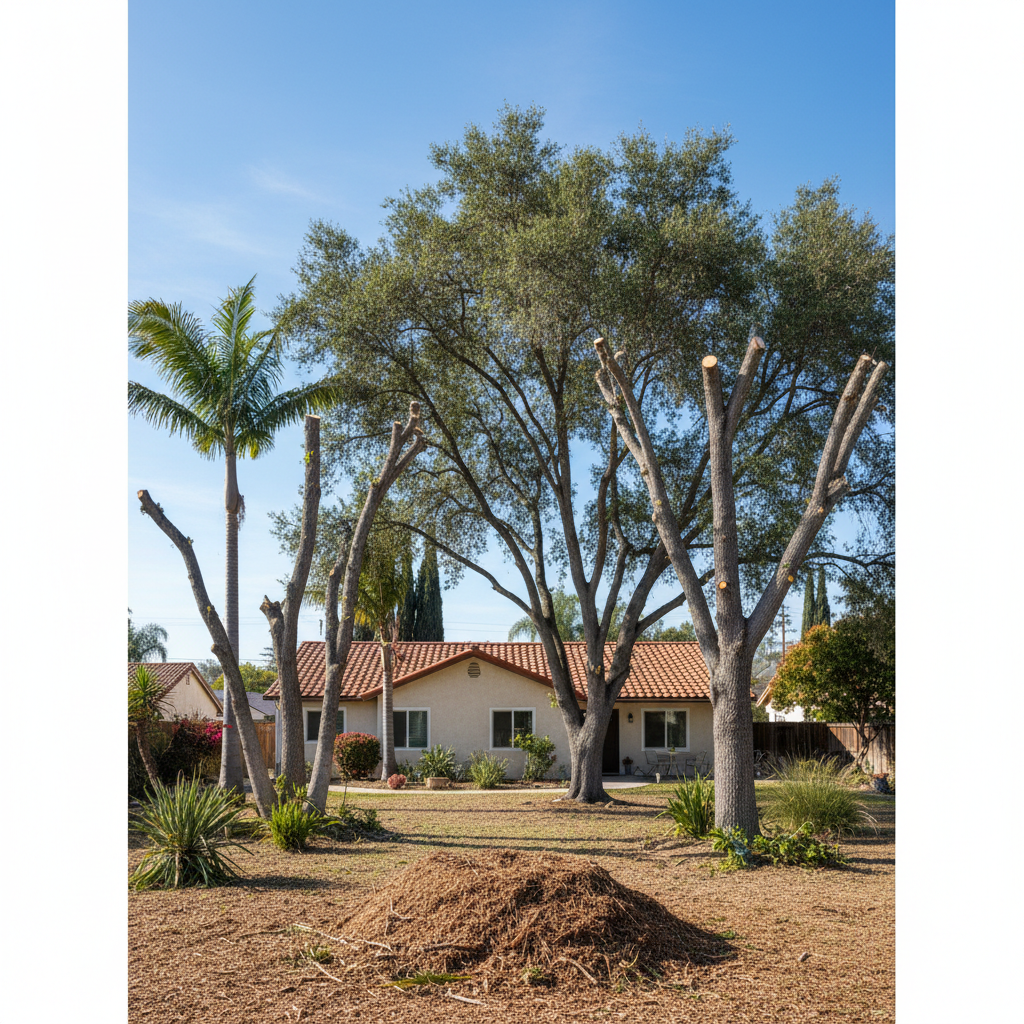
Let us talk about keeping your trees in good shape after they have had a good trim. You would not get your car serviced and then never check the oil again. The same idea goes for your trees. Especially here in National City, with our dry spells as well as the occasional Santa Ana winds, a little ongoing attention helps protect your investment as well as keep your property safe.
Extending the Life of Your Tree Trimming Work
When National City Tree Service finishes a trimming job, we are not just making your trees look good. We are setting them up for long-term health. This is not a one-and-done deal. To really extend the benefits of professional trimming, you have to keep an eye on things.
- Proper Watering is Important: This is probably the most important thing, especially in Southern California. Our Mediterranean climate means long, dry summers. Drought-stressed trees are more vulnerable to pests as well as diseases. They will not recover from trimming as well. Deep watering is key. You should forget those shallow, frequent sprinkles. Trees need water to go at least three feet deep. You should do this early in the morning to reduce evaporation.
- Mulch, Mulch, Mulch: A good layer of mulch, about 3-4 inches deep and kept away from the trunk, around the base of your trees helps keep soil moisture. It also keeps the soil cooler. This is a big deal during our hot summers. In addition, it breaks down over time, feeding the soil.
- Do Not Overdo It: You should resist the urge to constantly prune or trim. Over-pruning can stress a tree. This makes it more open to problems. A good professional trim should hold for a while.
- Keep an Eye on the Soil: Our local soils, especially in some of the older neighborhoods with more compact ground, can get really dry as well as cracked during drought periods. If you cannot push a shovel or screwdriver into the ground easily, your tree needs water.
What Regular Maintenance Looks Like
You can think of this as a yearly check-up for your trees. For most mature trees around here, a professional trimming every 2-4 years is a good general guideline. Some trees, like fast-growing pines or eucalyptus, might need attention every 2-3 years. Palm trees are a different story. They often need annual trimming to get rid of those dead fronds. These dead fronds can be a fire hazard.
During these regular check-ups, National City Tree Service looks for dead, diseased, or crossing branches. Removing these improves air circulation as well as sunlight penetration. This is vital for overall tree health. We are also making sure the tree's structure is sound. Our team clears branches away from your roof, power lines, and walkways. The City of National City actually has a grid system for street tree maintenance. If you have a city-owned tree in your parkway, they have a schedule for it.
Warning Signs of Problems
You are the first line of defense for your trees. If something looks off, it probably is. Here are some red flags to watch for:
- Leaf Changes: Leaves turning yellow or brown when it is not autumn, or dropping too early, especially from the outer canopy, are big indicators. You should look for brown, crispy edges too. That is often a sign of water stress.
- Bark Issues: Changes in the color or texture of the bark, or if it is becoming moist, could mean trouble. Loose bark, especially on a hardwood tree, is also a warning sign.
- Fungus or Growth: Mushrooms or other fungal growth at the base of the tree or on the trunk can signal decay or root rot. You should also keep an eye out for black, soot-like coatings on leaves as well as stems. This is often sooty mold.
- Oozing or Bleeding: Any sap oozing or dark staining on the bark is a sign the tree is injured or infected.
- Sudden Decline: If a tree just seems to be growing slowly, not growing at all, or has a general decline in health despite proper watering, something is wrong.
- Brittle Branches: Dead or brittle limbs and dead tips are clear signs of stress. This often comes from drought.
Our climate here in Southern California, with its warm temperatures as well as occasional wet winters, can create good conditions for certain diseases like anthracnose, powdery mildew, and various root rots. Drought also makes trees more open to pests like shot hole borers. National City Tree Service has seen a lot of these around here.
When to Call a Professional
National City Tree Service believes in DIY when it makes sense. Tree care is not always one of those times. Here is when you absolutely need to pick up the phone and call National City Tree Service:
- Any of those Warning Signs: If you see any of the issues just mentioned, especially oozing, significant leaf discoloration, or fungal growth, you should get a professional out there. Early detection can save your tree.
- Large Branch Removal or Structural Issues: You should not try to tackle big limbs yourself. It is dangerous. Incorrect cuts can do more harm than good. These cuts leave the tree open to rot. Our team has the right tools as well as the know-how to do it safely as well as correctly.
- Tree is Near Power Lines or Structures: This is a simple one for safety. You should never prune near power lines. Always call a professional.
- After a Storm: High winds, like those Santa Anas, can weaken branches or cause hidden damage. A professional can check the tree's soundness. They can remove any damaged limbs before they become a hazard.
- You Are Not Sure: If you are questioning whether a tree needs something or what is wrong with it, you should just call. National City Tree Service would rather come out for a quick look than see a tree get damaged. It is worse if it causes damage to your property.
- Regular Maintenance: Even if your trees look fine, getting a professional assessment every few years helps keep their health. It also catches potential problems before they become major issues.
National City Tree Service sees a lot of older ficus, pepper, and ironwood trees in National City. This is especially true in places like the older Olivewood as well as Granger blocks. These older trees often need careful, staged reductions over a few seasons. They do not need a harsh cut all at once. A harsh cut can shock them. A good arborist understands the specific needs of these local species as well as our unique coastal conditions. This includes salt-stressed canopies on the bayside blocks west of Highland.
Taking care of your trees is an ongoing commitment. This commitment pays off in healthy, beautiful trees. These trees add value as well as shade to your National City property.